Chadray D. Guisa-ed and Russell James R. Melchor
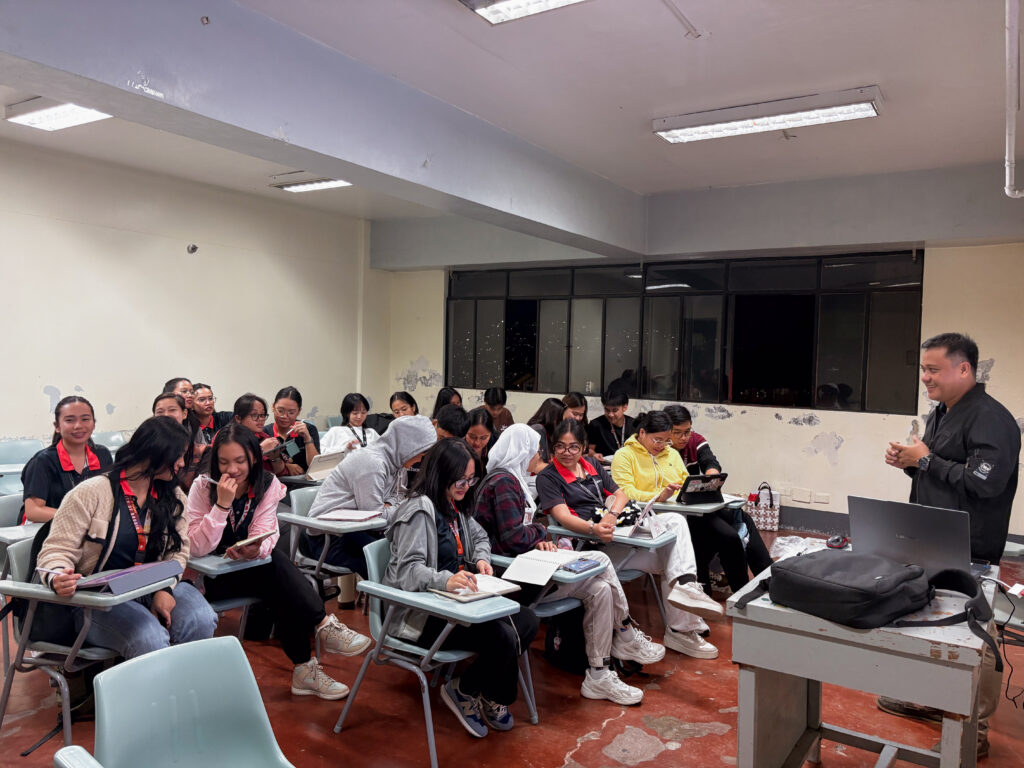
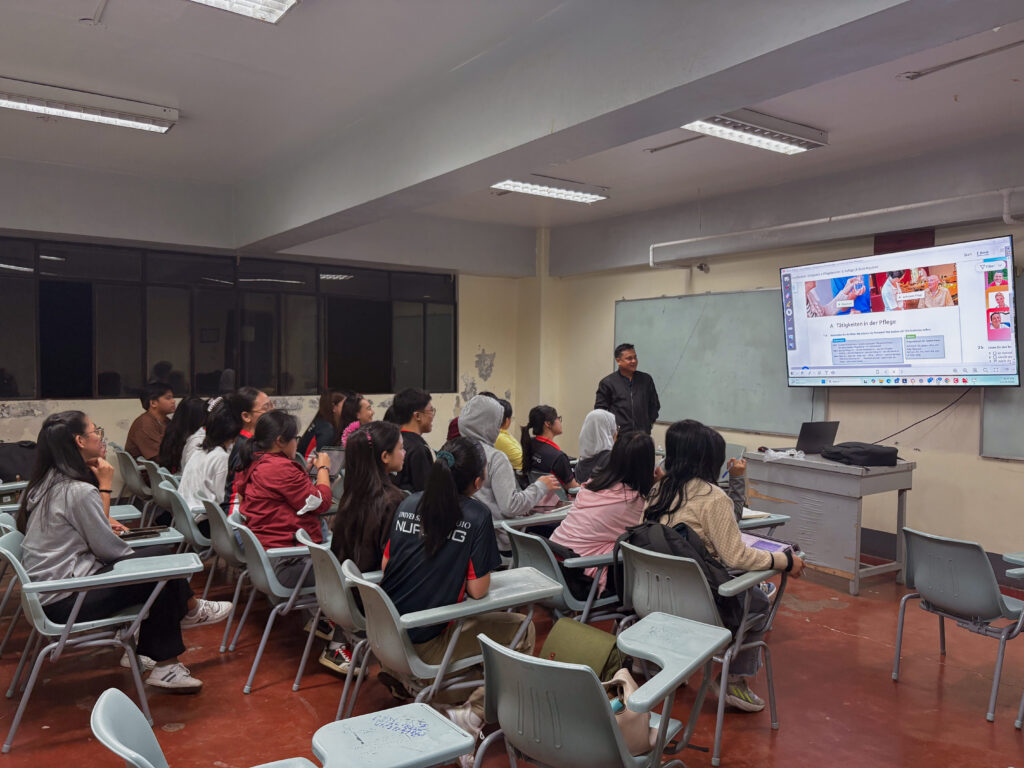
The Global Skills Partnership (GSP) nursing students of the University of Baguio (UB) officially began their B1 German language classes on November 13, 2025, marking another milestone in their journey toward global competence and professional readiness.
The B1 phase brings together 30 students from Batch 1 and 17 students from Batch 2, all of whom successfully completed their A1 and A2 German language levels from July 15, 2024 to June 2025. Additionally, 7 students joined Batch 2 after undergoing intensive online A1 and A2 German language classes from May 19 to July 16, 2025, demonstrating exceptional dedication in catching up with their peers.
The B1 level represents an important stage in language mastery. At this point, students progress from basic to intermediate proficiency and strengthen their ability to communicate clearly and confidently in both academic and professional settings. With the guidance of the partner language instructor from the Tandem Language Center and Training Center, the students will receive in-depth training in grammar, listening, reading, writing, speaking, and cultural orientation, all of which play a significant role in preparing them for future clinical practice and integration in Germany.
For Yesha Mel Mendillo, the program holds great importance as it equips them with skills and experiences that could benefit their future career.
“I think the GSP program is a golden opportunity to enhance my skills and knowledge and equip myself to be globally competent in my future career. It is a chance given to be able to work abroad with benefits of free language courses, specifically the German language and skills training incorporating the nursing practices in Germany. I gained new insights on the difference between the Philippine and German nursing practices and it further developed me as a nursing student and as a person. Punctuality is one to emphasize where timeliness is strict in German practice. Being on-the-dot is very important to be able to do all the assigned tasks and this made me improve my time management and discipline,” Mendillo shared.
When asked how the partnership between the University of Baguio (UB) and the Deutsche Gesellschaft für Internationale Zusammenarbeit (GIZ) GmbH will strengthen their global competence, Tashza Diamond Litaoen shared that the program prepares students through intercultural fluency, intensive language instruction, and vital cultural exchanges.
“The program ensures intercultural fluency through intensive German language instruction and vital cultural exchanges. This will allow us to communicate effectively with patients and colleagues, enabling our seamless integration into the German healthcare system in the near future. Second, the partnership enhances our professional adaptability by rigorously aligning the school’s nursing curriculum with established German healthcare standards. This comprehensive approach prepares us for the specific demands of both the Philippine and European hospital environments. Lastly, through advanced skills training conducted by experienced German trainers and professionals, the program successfully elevates our technical competencies to an internationally recognized level.” Litaoen expressed deep appreciation for the guidance provided by UB and GIZ, noting that the partnership is shaping them into resilient and globally ready nurses.
This initiative forms part of the Global Skills Partnership, a collaboration among UB, Klinikum Frankfurt (Oder) in Germany, and GIZ, with partial support from the German Federal Ministry of Health or Bundesministerium für Gesundheit. Through this partnership, UB implements professional and language training aligned with German requirements while also strengthening its curriculum to meet international standards. This milestone reflects the university’s ongoing commitment to provide quality education that prepares students for diverse and internationally aligned healthcare environments.
The program also demonstrates UB’s commitment to the United Nations Sustainable Development Goals. In particular, it contributes to SDG 17 on Partnerships for the Goals through its strong international collaboration with GIZ and Klinikum Frankfurt (Oder). These goals emphasize the importance of equitable learning opportunities and global cooperation in advancing professional development.
As the program moves forward, students gain more than technical skills; they develop intercultural awareness, professional adaptability, and the confidence to thrive in diverse healthcare environments. This collaborative effort ensures that graduates are not only prepared for the demands of the German healthcare system but are also empowered to contribute meaningfully to global health outcomes.
Ultimately, UB’s ongoing work with its international partners stands as a model of how educational institutions can build sustainable, future-oriented opportunities for their learners—opening doors, strengthening global ties, and shaping healthcare professionals who are ready for the world.