Written by Aissa Pater
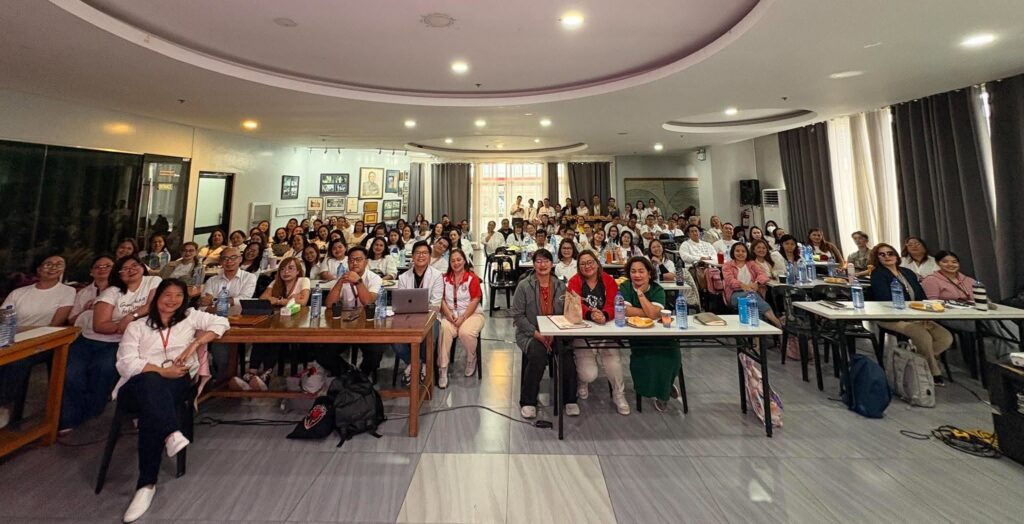
The University of Baguio conducted a faculty development seminar on the Safe Spaces Act (Republic Act No. 11313), or the “Bawal Bastos Law,” together with a session on Gender and Development (GAD) at the UB Centennial Hall hosted by the School of Nursing. Anchored on the theme H.E.A.L.— Harassment-free, Equal, Accountable, and Learning environments. The activity emphasized the importance of creating safe, respectful, and inclusive spaces where students, faculty, and staff can learn and work with dignity.
The activity also supports the United Nations Sustainable Development Goals (SDGs), particularly SDG 3: Good Health and Well-being, SDG 4: Quality Education, and SDG 5: Gender Equality which seeks to achieve gender equality and empower all women. It promotes awareness of gender-based discrimination, harassment, and unequal treatment while emphasizing the right of every individual to safety, dignity, and respect. With such, faculty members is geared to appropriate conduct, gender sensitivity, and mechanisms for addressing harassment while contributing to creating learning and working environments where individuals can participate without fear of discrimination or gender-based harassment. Strengthening awareness and accountability within the academic community, it reinforces the importance of creating educational environments that promote not only academic excellence but also individual’s well-being, equity, and inclusion.
The session was graced by Atty. Meri Guibac, Chairperson of the University’s Committee on Decorum and Investigation (CODI), who discussed the scope and responsibilities under RA 11313. She emphasized that gender-based sexual harassment may occur not only in workplaces but also in public spaces, online platforms, and educational institutions. Faculty members were reminded of their shared responsibility to recognize inappropriate behavior, take reports seriously, understand proper reporting mechanisms, and help build a culture where harassment is not normalized. As nursing educators, they are also called to model professionalism, respect, empathy, and accountability for future nurses.
The GAD session further highlighted equality, gender sensitivity, respectful communication, and inclusivity, reinforcing the importance of treating every individual with dignity regardless of sex, gender identity, or sexual orientation. The training concluded with a renewed commitment among faculty members to contribute to a culture where safety, respect, equality, and accountability are actively practiced. The H.E.A.L. framework serves as more than a theme for the activity. It represents a continuing commitment to make the university a place where every student, faculty member, and staff member can learn and work without fear of harassment or discrimination; where differences are respected; where concerns are heard; and where everyone takes responsibility for maintaining a healthy and dignified environment. It reinforced an important principle: a truly effective learning environment is one where people feel safe enough to learn, respected enough to participate, and valued enough to belong. Through continued faculty development, awareness-building, and collective accountability, the UB School of Nursing moves closer to creating learning and working spaces that do more than educate—they protect, empower, and H.E.A.L.